
Stargazers in the desert
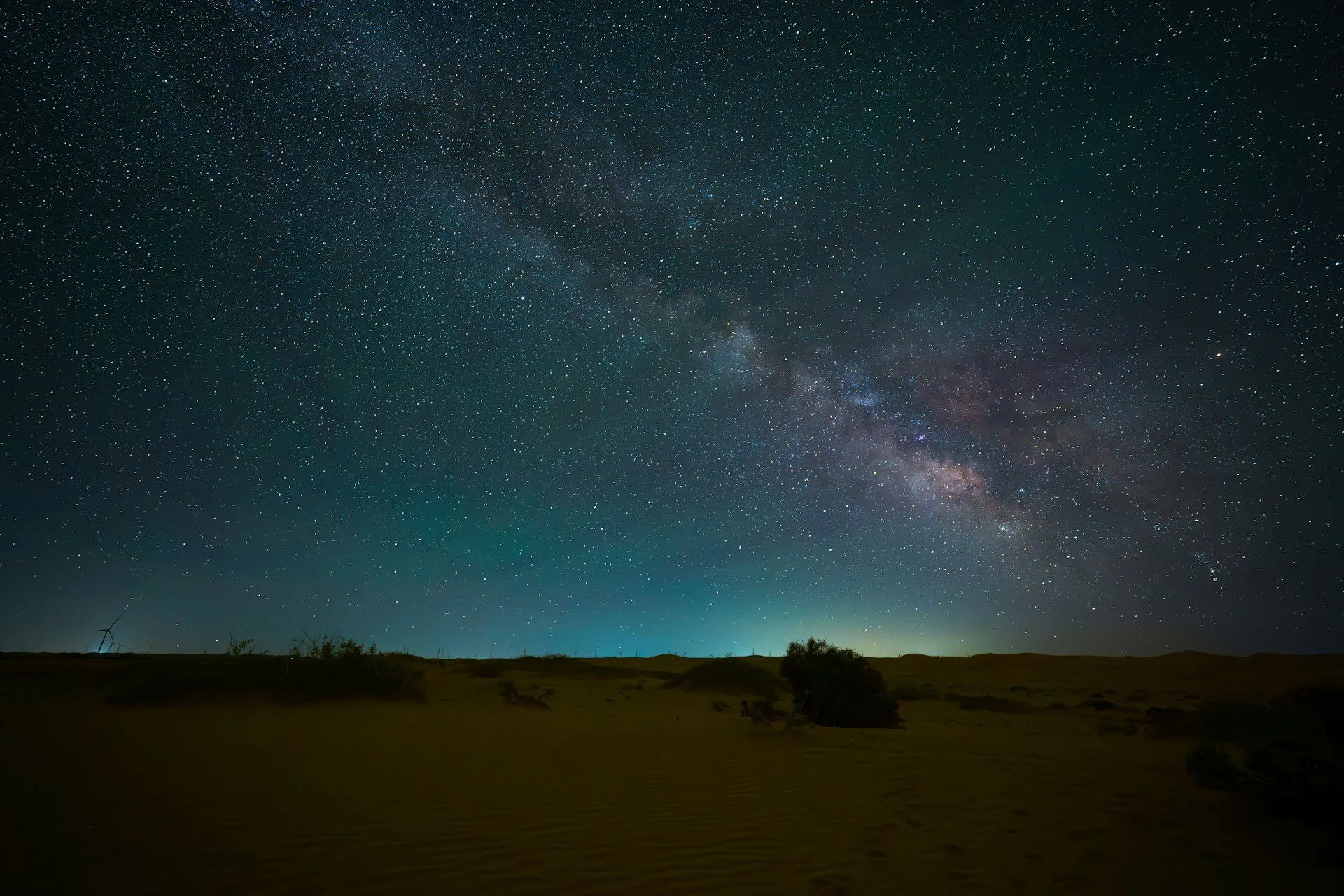
Photo by Tianhao Wang on Unsplash
By Tim Thorlby
4 mins (5 mins if you are eating a mince pie)
This blog reflects upon activism, change and hope, by way of the desert and the night sky. There may be a Christmas theme.
Look up!
I have been learning something interesting about the night sky recently.
Let me take you on a brief journey, from ancient Persia to the deserts of Arizona and back to our towns and cities in the UK.
It won’t take long. If you need a snack, maybe fetch a mince pie.
Ready?
Stargazers
By tradition, the ‘Three Wise Men’ are wise and learned stargazers from Persia, or even further afield, hence their great interest in the stars and their meaning.
Their journey to the hill country of Judea was prompted by their sighting of a ‘great star’ which they took to signify the birth of a great king. They were so excited they saddled up their camels and crossed the desert to go and see for themselves.
It’s one of my favourite parts of the Christmas story – three mysterious strangers from a distant country, motivated by curiosity and wonder, arriving – and leaving – in the dead of night.
But if they were still craning their necks up to the sky today, they might well struggle to see many stars. There is now so much light pollution above most of our towns and cities, that most stars are no longer visible to us. Any 21st Century stargazers may well have missed the heavenly sign altogether and would have had great difficulty in tracking it as they travelled.
It turns out that man-made light pollution above our towns and cities, and even above many of our rural areas, is now so bright that it is causing a whole bunch of problems. All those outside lights on the side of buildings, street-lights, neon signs and perimeter lights are spraying huge amounts of light up into the sky.
This unnecessary artificial light is harming wildlife – birds and animals are confused by excess light at night, disrupting their natural rhythms. There is growing evidence that our man-made lighting is confusing bird migration patterns at scale, contributing to their decline.
It also impacts on our own quality of life, with lots of blue light at night disrupting sleep, mental health and mood. Thoughtless lighting from neighbours can also be a cause of disputes, as brights flick on and off through the night.
In the last few decades, the evidence has been piling up that this ‘urban glow’ (now often in the countryside too) is causing growing harm.
And, of course, you can’t see the Milky Way or the constellations. For my children, the night sky is just an orange blur, not a thing of wonder.
Light is, of course, a very helpful thing. Lighting up our streets and paths is, on the whole, a good thing and good for safety. Of course it is. But all of the light that sprays up into the night sky is a complete waste of energy and money, and the brightness of some of our lighting is often unnecessary. It turns out that there is good lighting and…completely unnecessary lighting.
But is there anything we can do about this?
A voice calling in the desert
In another desert, far away, and a long time ago, a man asked the same question.
A voice calling in the desert.
He was a stargazer too.
And his name was Dave.
Well, Dr David L Crawford actually, to give him his full name.
You would find him in the deserts of north America, at the Kitt Peak Observatory, just off Route 86 from Tucson, Arizona. Dave was an astronomer. But, back in the 1980s, he found that his work and his hobby were increasingly being blighted by light pollution.
So, with others, in 1988 he founded what is now Dark Sky International, a campaigning charity which works across the world to promote dark skies and reduce light pollution across our urban and rural areas.
It turns out that fixing light pollution isn’t rocket science after all. Often, simply installing a simple metal cover over a street-light can block upwards light. With LED lights, they can be turned down – full stadium lighting is rarely required for most uses. The energy savings from these changes can be significant. A lot of Dark Sky’s work is educational – simply getting organisations and businesses to think about lighting before they buy it and install it, often saving them money in the long run.
Dark Sky International research the harm caused by pollution, promote responsible lighting products and practices and certify ‘Dark Sky Places’ across the world where you can, once again, see the universe clearly at night. It’s inspiring stuff and their website is worth checking out just for the wonderful pictures of the night sky.
After nearly 40 years of campaigning, the global dark sky movement has momentum. Campaigns have started in many countries across the world. Habits are beginning to shift.
Well done, Dave.
Light in the darkness
I have only recently discovered all of this.
I have had the pleasure of doing some research and consultancy for Dark Sky International in the last few months and have enjoyed learning about their work. (I have been researching how their global volunteer movement works, rather than advising on technical lighting standards, you will be relieved to hear.)
From a few enthusiastic astronomers in 1988 they have built a global movement of thousands of committed activists working around the world to ‘normalise’ conversations about responsible lighting, shift culture and mindsets and change lighting practices. The UK now has a partner charity – DarkSky UK - doing this too.
They campaign against unnecessary light pollution (too much light in the wrong places) but applaud responsible lighting (helpful lighting in the right places). Culturally speaking, their campaigns seek to enlighten our shared understanding of how to use light well.
Their work is a good example of what the BBC’s current 2025 Reith Lectures are focused on. This year’s lectures are being delivered by Rutger Bregman, a Dutch historian and activist, who is giving four inspiring and provocative talks on ‘Moral Revolution’.
Rutger is delving into history to illustrate how change for the better often comes from ‘below’. He is fond of quoting Margaret Mead, and then backing it up with historical evidence:
“Never doubt that a small group of thoughtful, committed citizens can change the world. Indeed, it is the only thing that ever has”
His talks are well worth listening to.
My own experience of such change – working within the living wage movement in the UK – definitely accords with the gist of his lectures – that we can make a difference as individuals, teams and communities and don’t need to wait for government, history or other people to act first.
My work in helping to set up and then lead Clean for Good, an ethical workspace cleaning company for London, was never glamorous and often challenging, but it has helped to improve pay and working conditions for hundreds of the lowest paid workers in London and is helping to shift the conversation in the wider cleaning sector too, by shining a light on bad practice and showing that ‘good’ is entirely possible and practical. (The company continues to grow, if you need your London office cleaning properly!)
If the Nativity was happening this Christmas, the heavenly choirs of angels would not have been singing to shepherds watching their flocks at night, but to the teams of cleaners working their night shifts. They would be first on the scene (and would have tidied up afterwards, no doubt).
Hope
I have long been of the view that hope is not an emotion but a decision that we make, regardless of how we feel and irrespective of the odds against us.
The Christmas story inspires me to choose hope.
So, whether you are a stargazer, a cleaner, an activist or a lone voice in the desert – Merry Christmas - and don’t give up.
(And enjoy your mince pies)
This blog was written by Tim Thorlby. Please sign up if you’d like to know about future blogs, usually published once a month. (It’s free!)