MONDRAGON: Humanity at Work - Economic growth for all, Basque-style
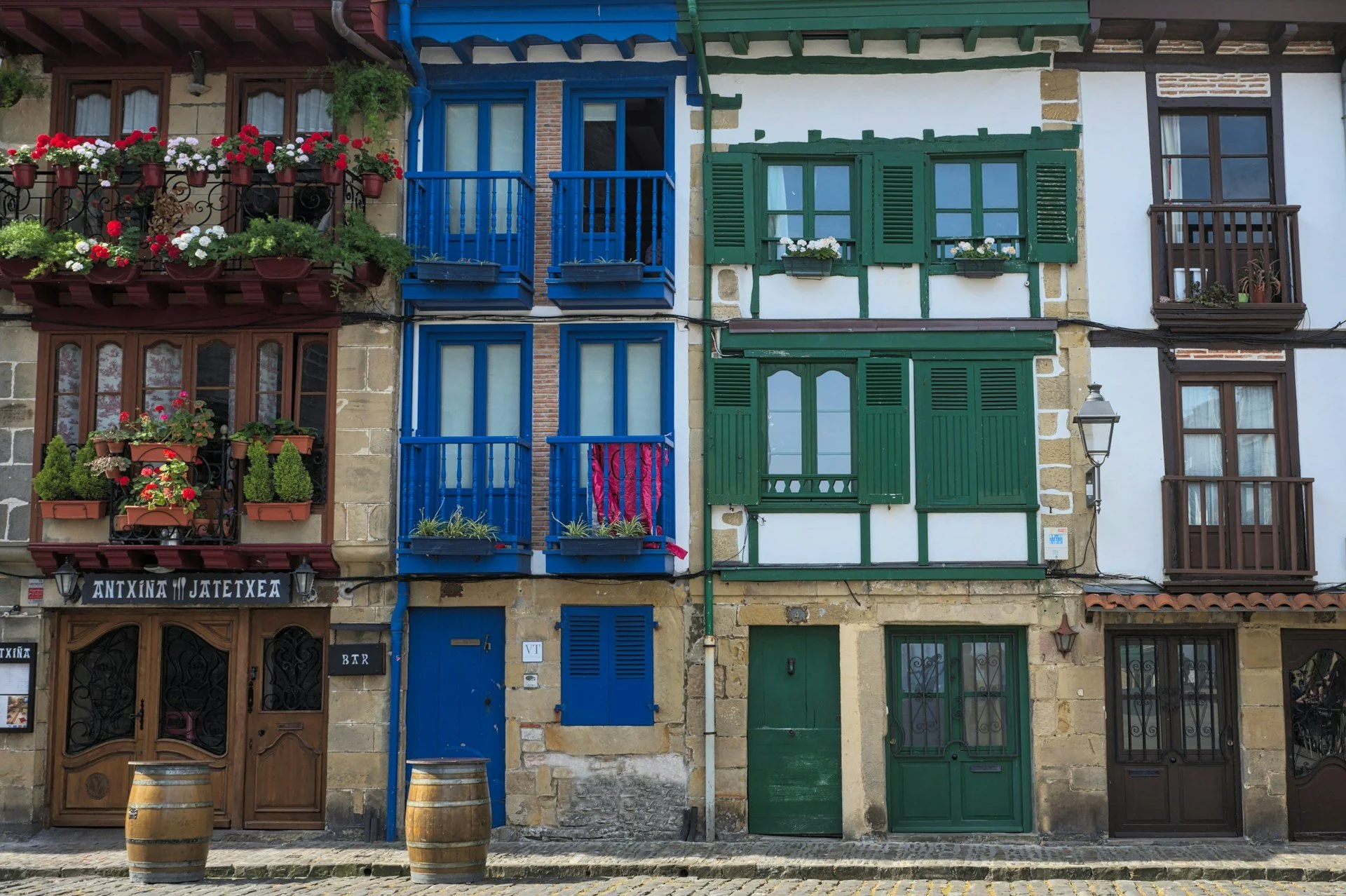
Photo by Eric Prouzet on Unsplash
By Tim Thorlby
7 min read
This blog takes us to the Basque Country of northern Spain. Famous for its historic language and culture, it is home to the city of Bilbao, a long-celebrated example of urban regeneration. It also home to one of Spain’s best-kept secrets – MONDRAGON – one of the world’s most successful and impactful social enterprises.
For anyone interested in economic growth ‘in every postcode’, this is one field trip you should not miss.
1 | What is MONDGRAGON?
Many people have never heard of MONDRAGON. This is surprising; it is a truly remarkable organisation from which we can learn a surprising amount. Hence this blog.
MONDRAGON is one of the world’s largest and most successful social-purpose businesses. It also one of the most interesting. Founded in 1956 in the Basque country of northern Spain by a Catholic priest, it now employs over 70,000 workers across 80 different business units and sells its products and services across the world. It has also helped to transform the local economy of this part of Spain.
As well as successfully competing in the open market – it is one of Spain’s largest businesses - it has also held on to its distinctive social values and is not a typical business. It is a great example of what is possible when you fuse ambition, innovation and social purpose.
(I should say that MONDRAGON is usually referred to in capital letters to distinguish it from the town of the same name where it began, so I’m not shouting at you. It is also pronounced ‘mon-drah-GOHN’, with the emphasis on the last syllable, if you are interested.)
MONDRAGON is perhaps best understood as a federation of worker-owned co-operatives. There are currently 81 different co-operatives which work together in four main business areas:
Finance – this includes banking and insurance businesses and credit unions
Industry – this includes an array of manufacturing and advanced manufacturing businesses as well as business services spanning law, architecture and design
Retail – it runs Eroski, a major chain of supermarkets in Spain, together with a few other food-related businesses
Knowledge – MONDRAGON has established its own University which is closely linked with its many businesses and which runs 12 R&D centres, ensuring that the business can tap into an ongoing stream of innovation
Today the business has a presence in dozens of countries and sells its products and services to over 150 different countries. It has an annual turnover of more than £9 billion (2025). It is big.
Its motto is ‘humanity at work’.
What makes MONDRAGON so interesting is not only how different it is to conventional businesses but also how different it is to the larger social businesses we are more familiar with in the UK – retail businesses like the John Lewis Partnership and the Co-operative Group (which runs Co-op supermarkets). John Lewis and the Co-op are broadly similar in in scale to MONDRAGON. They are Good Things for sure but also operate really quite conventional business models in many respects. MONDRAGON, on the other hand, really does do things rather differently.
2 | What makes MONDRAGON so different?
As a social-purpose business, MONDRAGON seeks to run excellent businesses, but it does so in line with its social vision. Like most co-operatives, its driving purpose is not just profit, but to provide fulfilling employment to its workers, to advance their development and also deliver wider community benefit.
What is perhaps unusual, even within the co-operative movement, is how it has retained its distinctive character and ethos even at scale and developed a strongly pro-social set of behaviours. I have picked out four behaviours that strike me as particularly unusual and interesting:
Democratic ownership and management – by its own admission, it is not a perfect organisation, but the degree of participation by workers in the ownership and management of its many business units is unusual. It is not a nominal ‘value’ but a lived expression of how these businesses actually work. The independence of each business unit is shown by how they come and go from the federation – occasionally voting to leave altogether; the democracy is for real. They also meet together and collaborate, with sophisticated structures in place across the federation to discuss issues and make decisions.
Fair pay and solidarity – a growing number of businesses in the UK pay the Living Wage (over 17,000 at the last count) and have recognised the importance of fair pay for all workers. MONDRAGON goes one further and also has a wage cap – the ratio of the highest earner (the CEO) to the lowest (the cleaner) is typically capped at 6:1. This is extraordinary, especially given the size of some of the businesses. Fairness is not a ‘value’ here, it is lived experience. A typical ‘high to low’ pay wage ratio amongst FTSE 100 corporations is closer to 200:1. Even most social enterprises in the UK don’t commit to a wage ratio.
This is a much more effective way of ensuring the fairer distribution of wealth than simply relying on the tax system to redistribute it afterwards. Focusing on how a business generates its profits is always more important than discussing where they go afterwards.
Social innovation ecosystem – Over time, MONDRAGON has established a range of businesses which collaborate with each other to support mutual development. They have, in effect, built their own ‘ecosystem’ to support the ongoing growth and flourishing of their workers and their businesses. So, the financial institutions support the growth of other parts of the federation, the university provides training and skills to ensure the competitiveness of workers and their services, and so on. This is not just a business, it is a mutually supportive ecosystem (– a concept described in detail by the Young Foundation; see the list of reports below for further reading).
This ecosystem may be a key part of the secret to their ongoing success. There is an unusual level of shared ambition and collaboration in this story across many people and organisations and it has led to an unusual level of innovation and growth.
Innovation is core to their culture and business behaviour – Innovation is a core value for MONDRAGON but also much more than this – it is a key feature of how they behave as a federation of co-operatives. Individual co-operatives seek to innovate. The University supports education, training and research to support co-operatives and their workers throughout their careers. There are also a dozen R&D centres focused on different types of technology and innovation. They are all linked together. Yes, it’s complicated. What is so interesting is that innovation is not seen as something that a handful of experts do in a closed room, but something which is highly participative and widely distributed, with lots of co-operation between different organisations. It seems to work well; innovation is cultural. The ‘agency’ of workers is a big feature. Learning is for everyone.
3 | What difference has MONDRAGON made to its region?
The organisation was founded in 1956 by a Catholic priest Fr José María Arizmendiarrieta. At the time, the Basque country was experiencing economic decline, poverty and unemployment. Regenerating the region was not high on the national government’s agenda. Fr Jose saw that the only pragmatic response was for the region to try to shape its own answer to its own problems.
Today, the same region has one of the lowest unemployment rates in Spain and one of the most equal societies. A significant economic transformation has taken place in this part of Spain. It cannot all be pinned on MONDRAGON, but the evidence is that it has clearly played a significant role in reshaping the local economy and doing so in a highly inclusive way. It has changed its region.
It is a powerful story. It is also another key difference with our English experience. Our stock answer to the needs of ‘left behind’ English regions is nearly always ‘inward investment’. We look to investors from elsewhere to arrive and save the day. We traditionally overlook the potential and possibilities of the people and businesses in the region itself, but these are the very raw materials that MONDRAGON has worked with, to powerful effect.
4 | What can we learn from MONDRAGON for England?
We always have to be a little cautious of ‘learning lessons’ between contexts that are really very different. It is not possible to ‘copy and paste’ this experience into an English region. It is clear that MONDRAGON is deeply rooted in, and shaped by, its Basque context and culture and its founding community.
We also shouldn’t idolise them either. They are clearly not perfect. But then, neither is any other business. As a recent Chairman, Jose Maria Aldecoa said:
“the co-operative model is absolutely flawed, but it has shown itself the least flawed in a crisis of values and models”
Taking these caveats into account, I think there are some rather provocative inspirations in this experience which we should reflect upon in England – those in the social investment and social enterprise world, as well as those who are interested to see our economy grow more generally.
I have identified five reflections, although I am sure there are more.
Reflection 1 | We should build collaborative enterprises not just invest in ‘heroic founders’
MONDRAGON’s experience has been collaborative and co-operative from the start. It has always been about people working together. There was no heroic entrepreneur or founder who ‘led from the front’, it was a worker-owned and worker-managed enterprise from the outset.
Yes, Fr Jose was instrumental at the start in getting it off the ground, but his role (and genius) was to establish a sustainable institution…and not to run it himself.
I think this is very different from the typical English social enterprise experience, where a lot of our national mindset is about finding heroic individual entrepreneurs and founders. Although there is a place for this, and it can work well, this highly individualistic approach cannot be the only approach. It also leaves many enterprises in precarious positions where they are too reliant on one individual. I have seen too many founders burn out to see this as a great model.
Perhaps there is something in the English business mindset that obsesses a little too much about the heroic founder. Do we need to shift to becoming more co-operative, to affirming agency amongst all workers? It is quite clear that collaboration within and across enterprises has been central to MONDRAGON’s success and also its long-term resilience.
At this point, some of you are already shouting that the UK already has a large co-operative sector. Yes, it does and it includes some great enterprises. The MONDRAGON experience suggests we should indeed be giving our own co-operative sector more attention - but it would be a mistake to think that this is ‘problem solved’. In recent years, much of the sector’s growth has been the sideways movement of businesses into employee-ownership or bits of the public sector into mutual trusts and many of these look like highly conventional organisations to me. Some 95% of the UK’s co-ops also have less than 50 employees. So, yes, there are some good things happening here, but I think there is still a lot to learn from MONDRAGON - Building more collaborative enterprises at scale and with deeply embedded social values.
Reflection 2 | We could be more disruptive in our social business models
One of the most interesting things about MONDRAGON to me is that it has not only been very clear about its social purpose, it has also gone about delivering this with a socially minded business model. The wage cap is one example, the level of worker participation in management is another.
These are not just social-purpose enterprises, they take the hard road and are also socially-shaped enterprises.
I think this is not as common as we might think in England, even within the social enterprise world and even amongst existing co-operatives. I have seen many wonderful social enterprises, deeply dedicated to their social purpose, but also observed that many of the business models remain very conventional.
For example, becoming a Living Wage Employer is great, but that is just a start, not an end (and some don’t even do that). Where is the ambition on social solidarity? A social enterprise cannot just be defined by its purpose, its impact is deeply shaped by how it does business too. I would love to see much more discussion of this and a much greater level of ambition in how the social sector goes about its’ business.
Reflection 3 | Innovation should be a driver in social enterprises
One of the standout features for me about MONDRAGON is how learning and innovation is central to their work. It is not a bolt-on activity undertaken by a handful of people, but part of how they do business. They invest in training and upskilling their workers. They invest in R&D of all kinds. They seek to learn, listening to the experience of their workers. I am struggling to think of an English comparison.
I think developing habits of learning, research, listening, piloting, R&D within social enterprise, within social investment and within economic development more generally would be game changing for us. There is a lot to think about here.
Reflection 4 | We overrate inward investment and underrate home-grown potential in our local economies
One of the most inspiring aspects of this story is its implausibility. A Catholic priest, with no particular experience of business, started a democratically shaped enterprise in a neglected region of Spain. It should never have worked.
Yet it did. It is a fascinating example that suggests that even our most ‘left behind’ regions may have more talent, skills, assets and potential than most passing economists might give them credit for. Do we always need to rely on overseas investors to ride over the hill and ‘save us’ with their footloose investments? I note that the same investors are often the first to leave in times of trouble too. MONDRAGON will never leave the Basque country, even if it was levelled to the ground, because this is their country and their place and they love it. They would just start again.
Again, I think our English mindset may need a thorough overhaul on this. We have ignored the indigenous potential of our ‘underperforming’ cities and regions for too long. I do not think devolution will automatically save us from this error either, if our Mayors continue to focus on inward investors alone. It requires a change of perspective and a willingness to grow businesses with deep local roots.
Reflection 5 | Distinctive social enterprises can ‘move the dial’
MONDRAGON has achieved sufficient scale, and operated for sufficiently long, that it has helped to lift its local economy to new heights. Importantly, its social model has also delivered a very inclusive kind of growth that has benefited lots of people and families, not just a lucky few. Its way of paying people has distributed more income to more households than many of the ‘more successful’ businesses nearby with higher turnovers and bigger profit margins.
MONDRAGON has helped to ‘move the dial’ in its region. When was the last time we saw a social enterprise impact so decisively in England?
5 | Conclusions: changing our mindset
I recently finished reading Prof Paul Collier’s rousing book ‘Left Behind: A New Economics for Neglected Places’ (2024). He tears into the failures of conventional economics and how our approach to economic development of the last 40 years has left many regions behind. It’s a vigorous read.
Part of his prescription for the future is to call for stronger public leadership in each region, more devolution of power and funding and a much greater focus on building these economies from the ground up in a joined-up way. He cites MONDRAGON in his book as a great example of what he means by inclusive growth.
I am sure that he is right that our approach to ‘growing our economy’ in England needs a radical overhaul (- a consistent theme through many of my previous blogs!)
But how might we take forward some of these reflections about MONDRAGON into our own experience here?
As a parting shot, here are four suggestions:
Re-weaving local economies - We need to take each city’s day-to-day foundational economy much more seriously. It needs accessible finance to support it (every region needs its own bank if you ask me) and local colleges and universities that engage with it. Re-weaving local economies and local linkages should help local businesses to grow faster and help more local people get jobs.
Scaling our best social enterprises – We need to get better at scaling our best social enterprises. This requires coaching, finance and support. Who is responsible for this? It’s not clear to me. Maybe we need a national Social Accelerator to support this?
Building new innovative co-operatives – I would encourage every region to set up a new ‘social innovation lab’ to develop new co-operative ventures that will be rooted in the local area and address local issues, with a view to encouraging collaboration between enterprises as they grow. We already see grassroots enterprises popping up each year, but the larger more complex organisations may need help getting off the ground. Let’s build some.
Investing in Social R&D – Social investors should financially incentivise social enterprises to engage in R&D, innovation and learning to encourage this habit and give it momentum. Someone should have a word with the Tax Man to see how he could get on board to help social enterprises.
There is much more to say, but I will leave it here for now. I hope you enjoyed our trip to the Basque country.
Let’s be ambitious for our towns and cities. Let’s take on big challenges and try implausible things. Sometimes they actually work.
This blog was written by Tim Thorlby. Please sign up if you’d like to know about future blogs, usually published once a month.
Further reading…
The MONDRAGON website provides a lot of useful information about their history and current operations
The Young Foundation published a fascinating report on social innovation back in 2017 - Heales, C, Hodgson, M & Rich, H (2017) Humanity at Work, The Young Foundation
There is a helpful summary on Participedia, last updated 2021 - Mondragón Co-operative Corporation: Participatory Business Management
For a more personal view, Andrei Lucas, a PhD student studying leadership, visited MONDRAGON in 2026 and wrote an article on his experience
For the latest rundown on the UK’s own co-operative and mutual economy, Co-operatives UK have published their latest ‘state of the sector’ report – Co-operative and Mutual Economy 2026
There is also a lot of academic writing about MONDRAGON too, much of it accessible online.